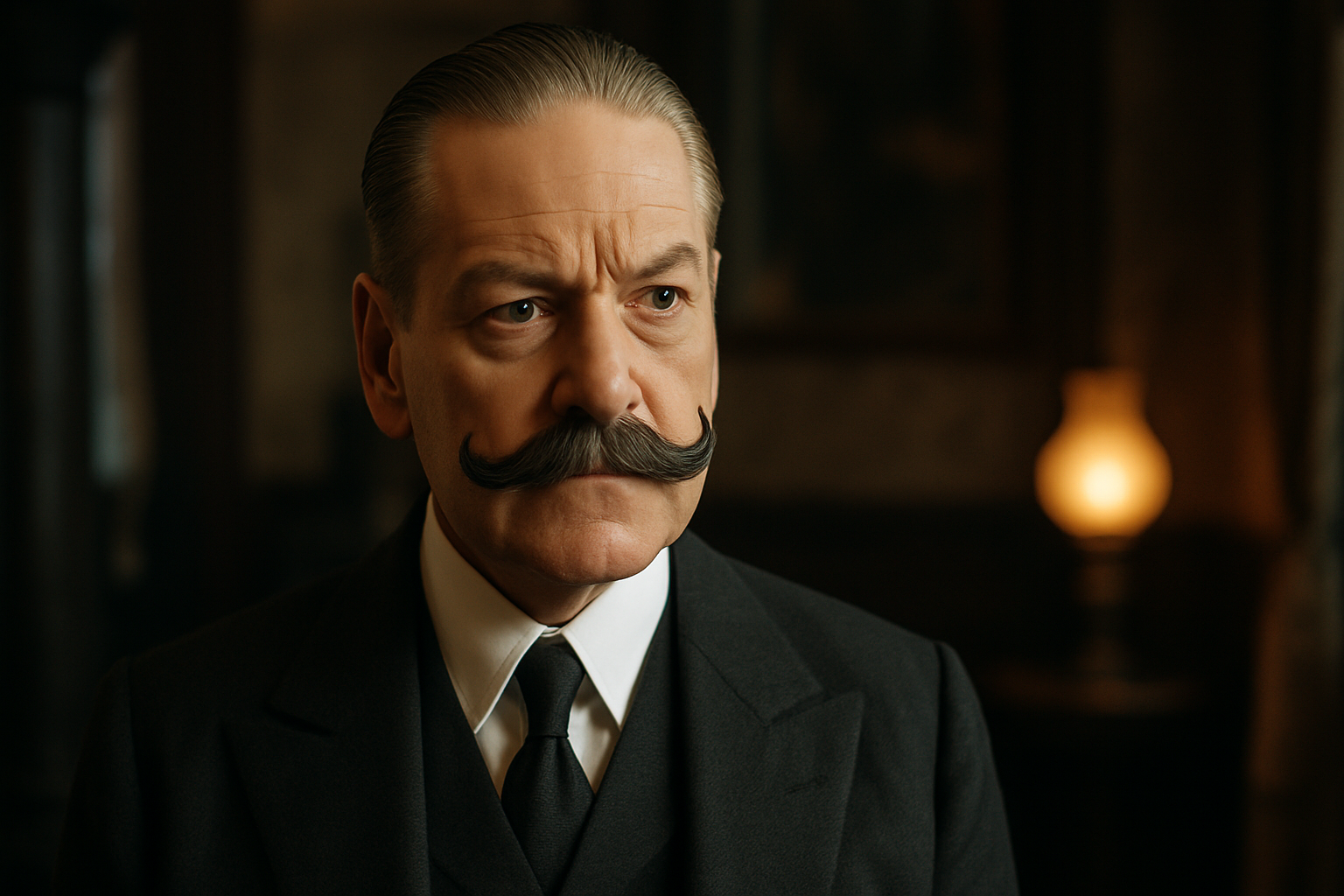
Kenneth Branagh has played Hercule Poirot three times now, and he still finds one part of the job genuinely unbearable. It is not the accent. It is not the suits. It is the mustache.
Speaking about his return to the role in A Haunting in Venice, Branagh admitted that the elaborate facial hair takes hours to apply every single morning. The Belgian detective's signature mustache is so famous that Branagh felt he had no choice but to wear it, even though the daily process tested his patience on every shoot day.
Why the Hercule Poirot Mustache Became a Daily Ordeal
Agatha Christie described Poirot's mustache in lavish detail across dozens of novels. It is stiff, military, and enormous. Branagh's version in Murder on the Orient Express was built from multiple pieces and glued on strand by strand. He has said the application alone could take well over an hour before cameras rolled.
That kind of commitment is unusual even for a major franchise. Most actors in a detective series get to sit in a chair for twenty minutes and walk out. Branagh signed up for something closer to a daily transformation. He has called the process uncomfortable, especially in hot locations where the glue starts to lift.
The payoff, of course, is that audiences instantly recognize the silhouette. Without the mustache, Poirot is just another man in a suit. With it, he becomes one of the most identifiable characters in crime fiction.
Agatha Christie's Detective Has Outlived Almost Everyone
Christie created Hercule Poirot in 1920 with The Mysterious Affair at Styles. She wrote him into more than thirty novels and dozens of short stories before killing him off in Curtain, published in 1975. By then he was already a global icon.
What makes the character so durable is his contradiction. He is fussy, vain, and obsessed with order, yet he reads people with brutal accuracy. Christie reportedly grew tired of him late in life, frustrated that readers wanted the detective more than they wanted her other work. That tension never slowed him down.
Film and television have kept him alive for a century. Albert Finney, Peter Ustinov, and David Suchet all built careers partly on his back. Suchet played him for twenty-five years on ITV, a run that many fans still consider definitive.
Kenneth Branagh's Version Split Fans From the Start
When Branagh's Murder on the Orient Express arrived in 2017, reaction was mixed. Some critics loved the lush production design. Others found his mustache distracting and his accent odd. The film still made enough money to justify two sequels.
Death on the Nile followed in 2022, delayed by the pandemic and shadowed by controversy around one of its cast members. A Haunting in Venice landed in 2023 and leaned into horror rather than traditional whodunit structure. Each film pushed the character further from Christie's original tone.
Branagh has defended the choices. He has said he wants each outing to feel like a different genre, with Poirot as the constant. That approach keeps the franchise from repeating itself, even if purists grumble.
What Branagh Still Loves About the Role
For all his complaints about the mustache, Branagh has never hinted at walking away. He talks about Poirot as a character with endless room to grow, a man whose ego hides genuine loneliness. That inner life is what draws him back.
The detective's appeal may simply be that he never changes. In a world of reboots that reinvent everything, Hercule Poirot stays stubbornly himself. Same mustache. Same little gray cells. Same infuriating confidence.
Whether Branagh returns for a fourth film is still an open question. If he does, someone should probably buy him a faster glue.